Gulmarg Wildlife Sanctuary - Wildlife Experience in the Scenic Beauty of the Himalayan.

The Gulmarg Wildlife Sanctuary spread over 180 square kilometres is a protected area in Gulmarg, Baramulla district of Jammu and Kashmir, India. The sanctuary was first declared as a game reserve in 1981 and later upgraded to a sanctuary in 1987. The Gulmarg Wildlife Sanctuary lies in the Pir Panjal Range of the Western Himalayas. The area is one of the best world renowned tourist destination for its famous meadows ,rocky cliffs, dense birch forests and a home for bird watchers. Gulmarg Wildlife Sanctuary is located near Srinagar and the distance is about 48 km. This place is immensely beautiful and full of natural beauty and vegetation. This paradise of Kashmir comprises a different variety of fauna and those who are planning to visit this sanctuary can see these creatures at close range.
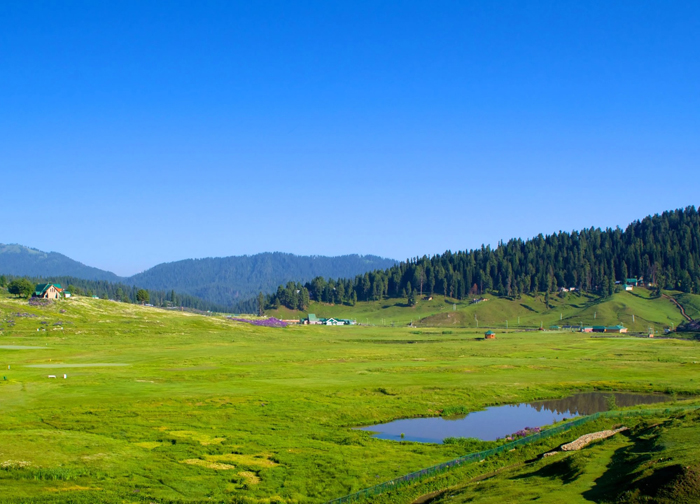
The vegetation of the Gulmarg Wildlife Sanctuary mainly consists of sub-alpine forests of silver fir, silver birch and blue pine. Silver birch is spread out in the mountain ridges. At lower altitudes, Pinus griffithi are predominant in the blue pine forests that surround the Gulmarg resort. The alpine meadows are dominated by the herbaceous flora of different species. These include Corydalis, Inula, Potentilla, Primula, Gentiana, Rumex and Iris. The sanctuary has also valuable resources of medicinal plants such as Saussurea costus, Picrorhiza kurroa and Jurinea dolomiaea. Gulmarg Wildlife Sanctuary abodes rich faunal and floral bio-diversity with variegated species.

The Gulmarg Wildlife Sanctuary is noted for its wildlife. The mammals found in the sanctuary include Himalayan brown bear, Asiatic black bear, Leopard, Musk deer, Kashmir grey langur, Snow leopard, Tibetan wolf, Red fox, Leopard Cat, Jungle Cat and Yellow-throated Marten. The sanctuary acts as a natural corridor in the movement of brown bear and markhor between Poonch and the Kashmir Valley forests.

The Gulmarg Wildlife Sanctuary has a recorded 95 bird species of different families including Kashmir flycatcher, Himalayan snowcock, Impeyan monal and Koklass pheasant. There are 31 butterfly species also reported in the sanctuary. The best time to visit Gulmarg Wildlife Sanctuary is September to March for mammal view and for birds view is March to May.

Gulmarg is very famous for its skiing scenes in India. This town is located on the Pir Panjal Range, which is a part of the western Himalayas. The sanctuary lies on the north-eastern side of the Pir Panjal mountain range and falls under the northwest Biogeographic Zone 2A. It lies 50 kilometres south-west of Srinagar and 26 kilometres from Baramulla.


 EN
EN  German
 Spanish
 French