Jagannath Rath Yatra Puri 2026 - Festival of Chariots in India
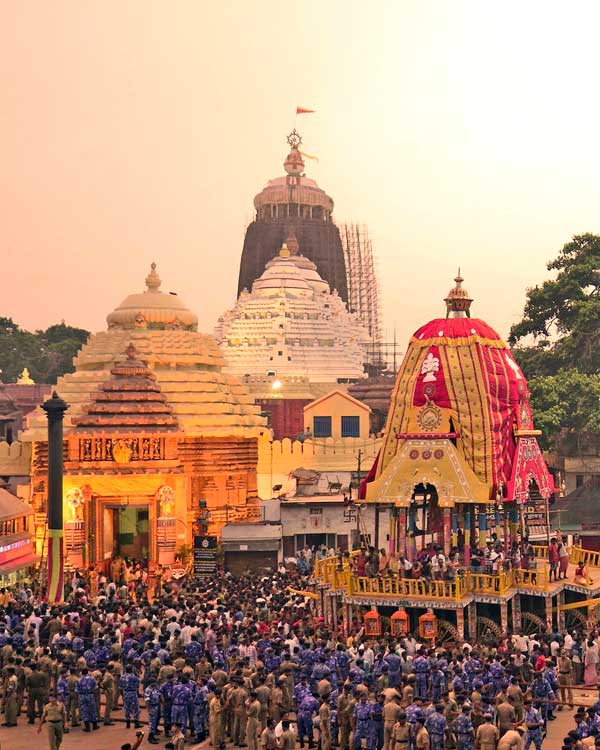
One of the four most famous holy pilgrimages of the Hindus in India is the Jagannath Temple of Puri. A majestic chariot festival, Rath Yatra is a Hindu festival dedicated to Lord Jagannath held at Puri in the state of Odisha every year. The world-famous Rath Yatra will be held on July 16, this year. It is one of the biggest festivals during the monsoon season. According to the Indian solar calendar, it falls two days after the new moon day of the month of Asadh. The festival of Rath Yatra celebrated here, is world famous for the enormous crowd of devotees that gathers to witness Lord Jagannath's yearly journey in his huge chariot.
Every year in June or July, the sacred coastal town of Puri comes alive to celebrate the Rath Yatra of Lord Jagannath, As the preparations for the procession begin, all routine activity in the town comes to a standstill. The temple kitchen - the largest in the world - serves more than 75 quintals of rice everyday along with 55 other dishes. These are offered to the gods in the temple and later distributed as Mahaprasad to the devotees. The world-famous Rath Yatra of Puri also finds a mention in ancient scriptures such as the Brahma Purana, Padma Purana, Skanda Purana and Kapila Samhita.
Facts About Puri Rath Yatra
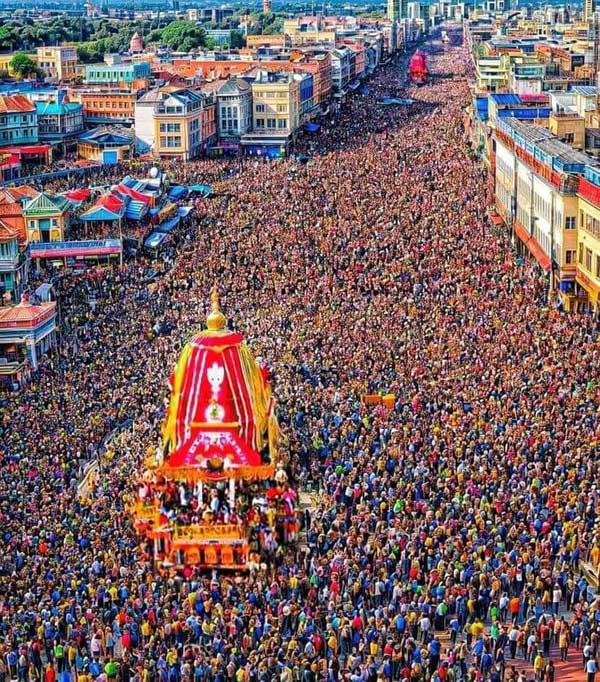
Every year, three giant separate wooden chariots are made of a kind of Neem tree for the deities Jagannath (ruler of the world), his elder brother Balbhadra (Balaram) and sister Subhadra. Lord Jagannath’s Rath, "Nandighosha" also known as Garudadhwaja or Kapiladhwaja is about 44 feet tall. The chariot has 16 wheels and the dominant colours used for that are red and yellow. Balbhadra’s chariot is called Taladhwaja and it stands tall at 43 feet. It has 14 wheels and the colours used for decorating it are Red and Bluish-Green. Meanwhile Subhadra’s chariot has 12 wheels and the colours associated with her are Red and Black. Her chariot is known as Darpadalana (Devadalana or Padmadhwaja) and it is 42 feet in height.
The ritual of bringing the idols of Lord Jagannath, Balbhadra and Subhadra out of the temple and installing them in their respective chariots is called Pahandi. Interestingly, the King (known as the Gajapati) dresses like a sweeper and cleans the road with a golden-handled broom and water scented with sandalwood paste. This ritual is called the Chera Pahara. It is repeated on the last day of the Yatra as well. As per the tradition, the deities begin their return journey on Ashadha Shukla Paksha Dashami, a custom known as Bahuda. It is also called Dakshinabimukhi. According to the age-old custom, before returning to their abode, the Gods halt at Goddess Ardhashini’s temple to pay obeisance to her.
Ratha Yatra is perhaps the grandest festival on earth. Everything is on a scale befitting the great Lord. Full of spectacle, drama and colour, the festival is a typical Indian fair of huge proportions. It is also the living embodiment of the synthesis of the tribal, the folk, and the autochthonous with the classical, the elaborately formal and the sophisticated elements of the socio-cultural-religious ethos of the Indian civilization.
Rath Yatra Celebration

Amidst the resounding clash of cymbals and the tumultuous thundering of drums, the three gods, Lord Jagannath, his brother Balabhadra and sister Subhadra leave their abode, the Jagannath temple, to journey to the Gundicha Mandir, three kilometers away. Millions of devotees flock come to watch the trinity ride in their elaborate chariots through the streets of Puri. Since the portals of the Jagannath temple allow entry only to Hindus, one of the gods, Maitri Devta, who symbolizes universal brotherhood, steps outside during this time so people of all religions and castes can pay obeisance.
A spiritual ambience pervades the whole scene as bells chime; conch shells blow and the saffron robed sadhus dance with abandon. It is fascinating to watch the delirious masses paying homage to the Lord as the chariots move on almost as if propelled by a divine force. The concluding rituals of the Rath Yatra called Suna Besha and Adhara Pana are conducted on the tenth and eleventh day respectively. Suna Besha is a ritual when the Gods are decorated with gold ornaments and the Adhara Pana is the sweet offerings made to the gods after which they are taken around the city in a rath.
A glimpse of Lord Jagannatha on the chariot is considered to be very auspicious and saints, poets and scriptures have repeatedly glorified the sanctity of this special festival. The sanctity of the festival is such that even a touch of the chariot or even the ropes with which these are pulled is considered enough to confer the results of several pious deeds or penance for ages. In fact, there is a famous Oriya song which says that on this occasion, the chariot, the wheels, the grand avenue all become one with Lord Jagannatha himself.
Rituals of Rath Yatra

The world famous Jagannath Rath Yatra in Puri, Odisha, will be celebrated on Thursday, July 16, 2026. On Ashadha Shukla Dwitiya, Lord Jagannath accompanied by Lord Balabhadra and Goddess Subhadra embarks on a journey to the Gundicha Temple, riding upon their respective chariots. The ceremonial worship of the timber intended for the construction of these chariots commenced on Basant Panchami every year. This festival is regarded as immensely sacred by devotees, with millions of people participating in the pulling of the chariots.
Key Rituals of Rath Yatra
Snana Yatra: Occurring on the full moon before Rath Yatra, the deities are bathed with 108 pitchers of water, after which they are believed to fall ill and are confined for 15 days, known as Anavasara or Anasara.
Netra Utsav/Chakraraj Maharathotsav: A ritual to consecrate the idols, particularly their eyes, after their recovery from the "illness" just before the yatra begins.
Chhera Pahanra: A highly significant ritual where the King of Puri, or his representative, cleans the platforms of the three chariots with a gold-handled broom, symbolizing that everyone is equal in the eyes of the Lord.
Pahandi (Pahandi Bije): The ritualistic, rhythmic procession in which the idols are moved from the temple, swayed by priests to their chariots.
Chariot Pulling: Thousands of devotees pull the giant chariots Nandighosha (Lord Jagannath’s Rath), Taladhwaja (Balbhadra’s chariot) and Darpadalana (Subhadra’s chariot) using thick ropes.
Ratha Yatra: The three gods, Lord Jagannath, his brother Balabhadra and sister Subhadra leave their abode, the Jagannath temple, to journey to the Gundicha Mandir, three kilometers away.
Bahuda Yatra: The return journey of the deities back to the main Jagannath Temple, typically nine days after the initial procession.
Suna Besha: Following their return, the deities are adorned with gold ornaments on the chariots.
These rituals represent profound devotion, where pulling the chariot is believed to grant salvation (moksha).




 EN
EN  German
 Spanish
 French